



Published
Last month in Washington, D.C., innovators, advocates, researchers, and engineers came together to share answers to a deceptively simple question: what if the buildings we occupy could help keep us healthier? At the ARPA-H Healthy Buildings Demonstration Session, performer teams from the Building Resilient Environments for Air and Total Health (BREATHE) program and PRO-MICROBE Exploration Topic came ready to show their rapid progress. Their novel biosensors and risk assessment technologies are designed to detect and respond to airborne biological threats earlier than ever before and to build a future where healthier buildings lead to healthier lives.
Feel the excitement in our recap video:
Microscopic threats with major impacts
Americans spend roughly 90% of their lives inside buildings. We live, shop, work, learn, and heal in the great indoors. Yet, the air inside these buildings has remained largely unmonitored, unmanaged, and underestimated as a health risk. Indoor air can harbor mold spores, allergens, microbes, and irritants at concentrations that far exceed what we encounter outside.
These microscopic threats are hard to accurately detect, but their consequences are not. Poor indoor air quality is a major contributor to allergies, asthma, COPD, and other chronic respiratory illness. It also fuels the spread of airborne infections. All in, experts estimate that poor indoor air quality contributes to over $180 billion in healthcare costs each year in the United States. For the most vulnerable Americans—children, older adults, and the 28 million of us living with asthma —the toll is felt across missed school days, preventable ER visits, and serious complications that can last a lifetime.
Hear from BREATHE champions about why indoor air quality matters to them:
Bold tech that helps us breathe easier
Making indoor spaces healthier is exactly the kind of intractable technical challenge that ARPA-H was created to solve. BREATHE and PRO-MICROBE—both led by ARPA-H Program Manager Dr. Jessica Green—are taking two bold approaches.
Researchers supported by BREATHE are creating air quality control systems that sense, think, and respond with real-world energy and cost efficiency in mind. The vision is a built environment that continuously monitors the biology, chemistry and physics of indoor air, identifies threats in real time, and triggers protective responses before occupants are exposed.
At the demonstration—just nine short months after awards were made—each team showcased remarkable technological advancements. Researchers displayed early-detection biosensor prototypes that can rapidly and autonomously identify harmful microbes and allergens at concentrations far below what current systems register. Others debuted autonomous response systems poised to intervene by adjusting building airflow.
Soon, with ARPA-H support, the teams will install their unique technical solutions in existing environments with a profound impact on health outcomes, including schools, hospitals, military medical facilities, and day cares. Each team has worked closely with community stakeholders from the start to design workable solutions, and the bar for success is high: BREATHE teams are tasked with reducing respiratory illness by 25% in the populations that use these facilities. Importantly, they must achieve that reduction at a realistic cost: successful solutions must provide a 10% return on investment. The study designs are rigorous, as teams are collecting up to four years of longitudinal real-world data.
PRO-MICROBE researchers focused their efforts on developing a “microbial health score.” Using artificial intelligence and microbial samples from hundreds of real homes, the team hopes to create an index that can help people better understand how both the harmful and beneficial microorganisms in their homes are affecting their health.
We’re just getting started
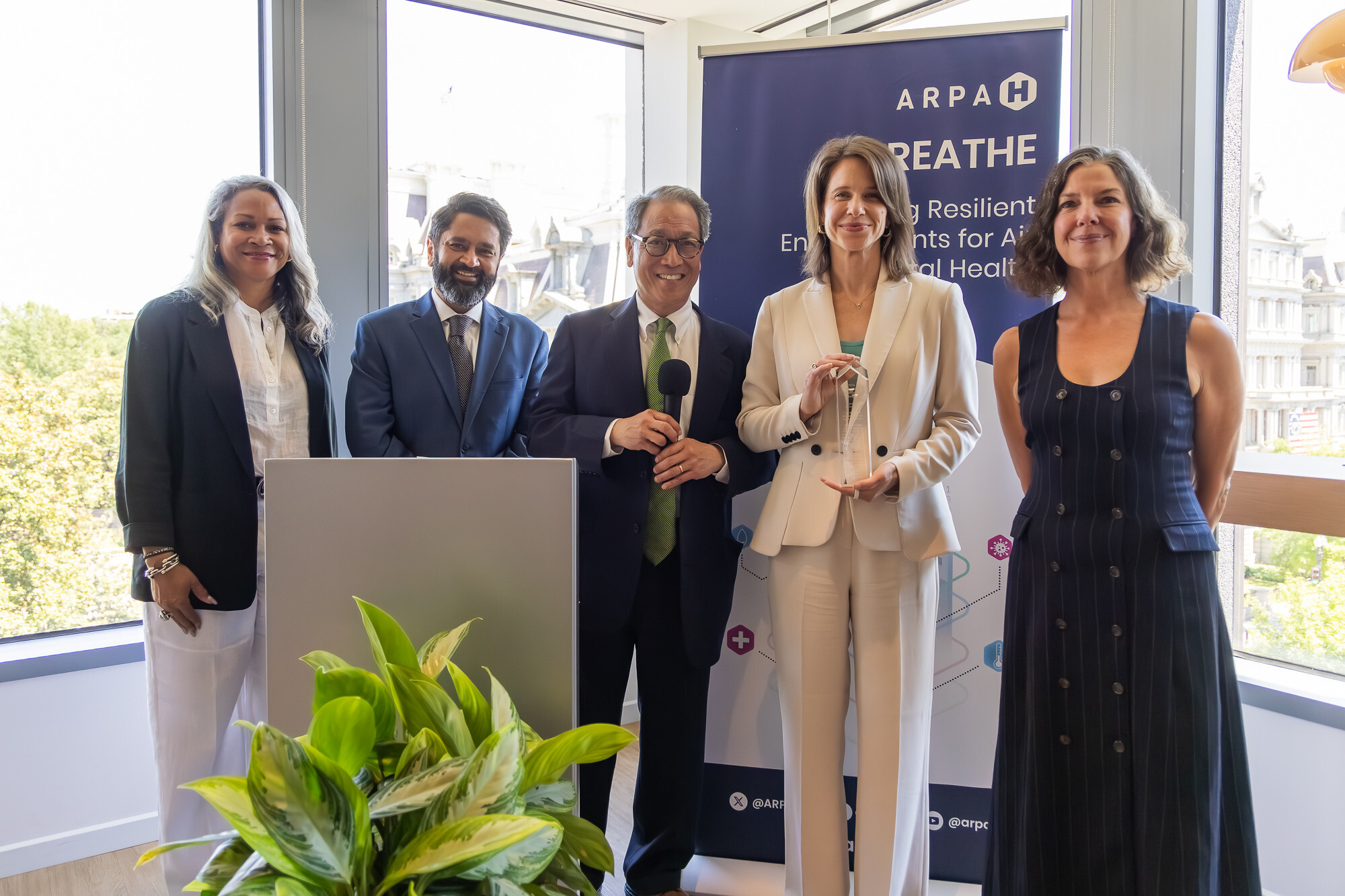
This rapid progress caught the eye of the New York Times, which covered the event, and of several indoor air advocacy groups, who honored ARPA-H with an award for Leadership in Innovation. While these are exciting achievements, last month’s demonstration was a milestone—not the finish line. Stay tuned for more developments on BREATHE, PRO-MICROBE, and the growing roster of ARPA-H programs finding powerful ways to prevent illness before it occurs.