


Published
“The way we make scientific discoveries has changed, and the Kyoto Vision is a recognition of that shift and a call to action.”
With those words on October 4th, White House Office of Science and Technology Policy Director Michael Kratsios announced the Kyoto Vision for a Golden Age of Science at the 23rd Annual Meeting of the Science and Technology in Society (STS) forum, a declaration endorsed by the United States and 16 other countries. An ARPA-H delegation was in the room and already helping put that vision into action with activities to mobilize cutting-edge capabilities for bold R&D programs, including for the U.S.-Japan Technology Prosperity Deal (TPD).
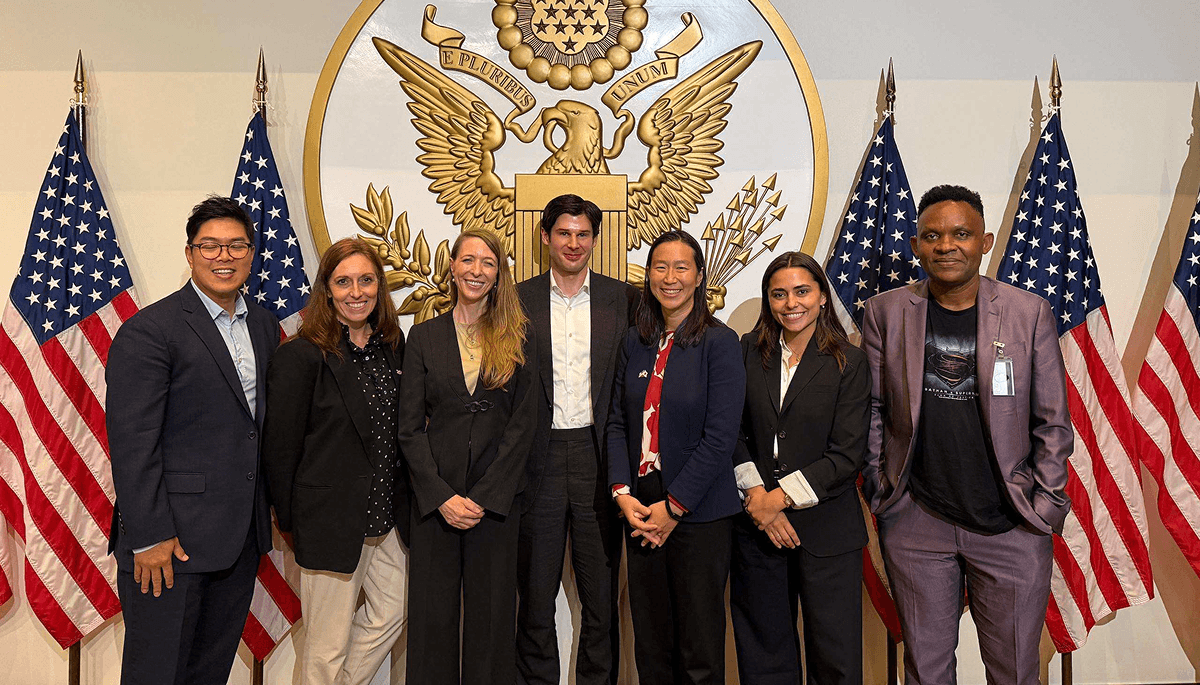
It was the opening of a week in which ARPA-H brought its high-speed transition model to Japan with more than 20 engagements across seven cities, three invited speaking appearances, meetings with senior Japanese government leaders, and visits to the laboratories and institutes where Japan's next generation of health technologies is being built.
More than a trip, the week showed how ARPA-H is extending the ecosystem it builds at home to one of America's closest science and technology partners.
Why Japan, and why now
In October 2025 the United States and Japan signed a Technology Prosperity Deal (TPD), committing both governments to deeper cooperation in artificial intelligence, quantum science, biotechnology, and pharmaceutical and biotechnology supply chains. One year on, in Kyoto, the two governments are deepening their partnership across those areas. ARPA-H's engagements advanced the health and biotechnology components by highlighting how the ARPA-H model for transformative innovation can play a unique role in bringing breakthroughs to life. Collaborating with Japanese government counterparts could further cutting-edge capabilities from both countries to meet shared health needs.
Japan brings capabilities that complement U.S. strengths. Continued Japanese investment in quantum sensing has produced foundational discoveries in quantum science. Japan is also a global leader in robotics, with industrial and medical robotics expertise that applies directly to the automated manufacturing, surgery, and laboratory workflows ARPA-H seeks to bolster domestically. The nation’s distribution infrastructure for biological medicines, including the cold-chain logistics and regulatory coordination that complex biologics require, can inform how new therapies reach patients at scale. Each of these areas aligns with active ARPA-H program interests, and each is a place where a connected effort could move faster than either country working independently.
Building those connections is part of our mission: identifying the partners, performers, and transition pathways abroad that help ARPA-H programs deliver for American patients faster.
Taking the ARPA model to the stage
ARPA-H was in front of audiences across the academic, startup, and industry actors in the Japanese biotech ecosystem.
At the 24th annual STS forum in Kyoto, ARPA-H Division of International Affairs Director Amy Lin joined a session on The Global Rise of ARPA-Style Agencies chaired by Renaissance Philanthropy CEO Tom Kalil, alongside counterparts from Europe, Japan, Australia, South Korea, and the U.S. National Science Foundation (NSF). The conversation recognized the growing global interest in the ARPA model, and what innovation agencies can learn from one another about setting ambitious goals, selecting entrepreneurial Program Managers, and redirecting efforts that aren’t working.
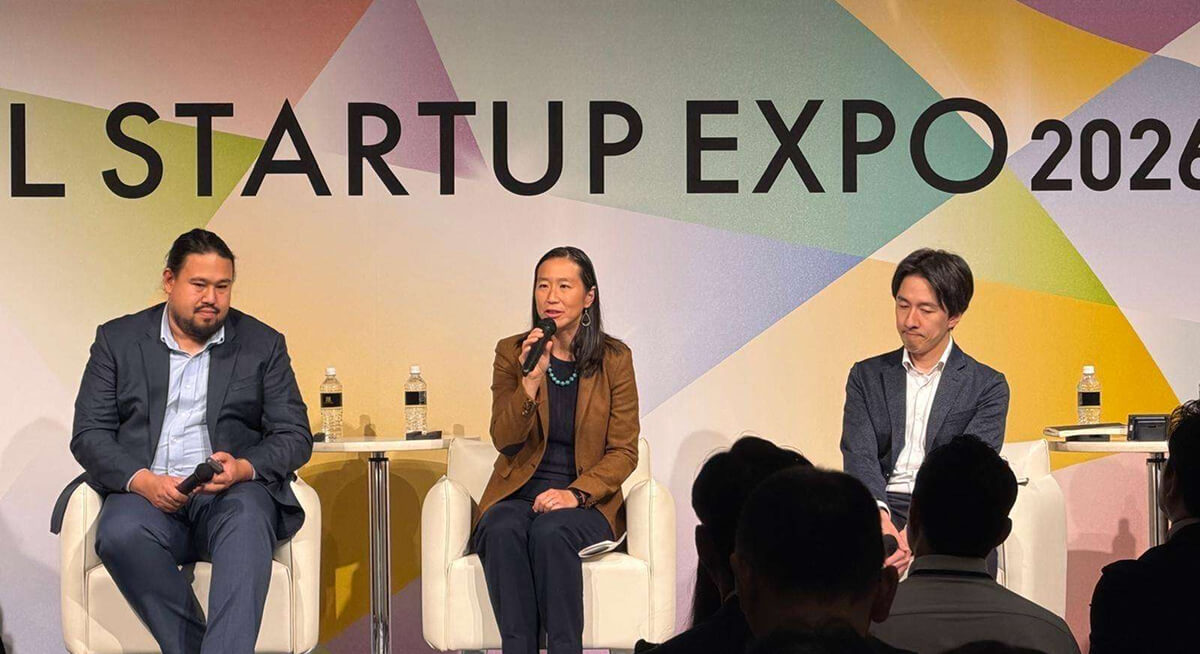
The next day in Osaka, at the Global Startup EXPO 2026, Lin took part in Shaping the Future of the Bio and Life Sciences Cluster, a panel moderated by Cambridge Innovation Center Catalyst APAC Director Ayano Kagami with leaders from Japanese academia, regenerative medicine, and venture investment. For an audience of corporate leaders, investors, and founders, conversation focused on the ecosystem behind the science: how active program management with a focus on real-world impact helps embed a commercialization mindset to move technologies from bench to bedside.
At CONVERGE\Kyoto, convened by the Corundum Convergence Institute, a session titled Funding Innovation, From Breakthrough to Impact examined how public funding, philanthropy, and private capital play different but complementary roles, and how an agency built to take early technical risks, like ARPA-H, can smooth the way for eventual commercialization and scale-up for faster real-world impact.
"ARPA-H's bold approach to healthcare innovation is serving as international inspiration. Our strengths and risk tolerance complement the capabilities and technology in Japan, so partnerships can help us both unlock the medical solutions of the future."
— Amy Lin, Director, Division of International Affairs, ARPA-H
Government to government
Beyond the podiums, the week was about building relationships. The delegation met with the Prime Minister’s Cabinet Office, the Ministry of Health, Labour and Welfare (MHLW), Pharmaceuticals and Medical Devices Agency (PMDA), and with the Japan Science and Technology Agency (JST). Those conversations covered the questions that underpin any future collaboration. Discussions of how each side operates showed where strengths may be complementary and how each entity views the evolving biotech landscape and implications. Common themes included regulatory science, supply chain security, and the growing need for longevity and healthspan interventions. These face-to-face conversations enabled a more candid exchange to build a deeper understanding of possibilities for more technical follow-up conversations.
In the labs
Across the week, ARPA-H's Program Managers (PMs) conducted site visits and met with pioneering researchers whose work could directly inform, advance, validate, or help commercialize their program portfolios.
Gloria Elliott, Ph.D., whose BoSS program aims to make biologics stable and distributable without the cold chain, visited the National Agriculture and Food Research Organization (NARO) in Tsukuba, where researchers study organisms that survive complete desiccation, and Fujifilm Toyama Chemical to learn more about technology for storage and distribution of biologics.
Wil Ngwa, Ph.D., Program Manager for the 1-CURE cancer treatment and UNIQUE quantum sensing efforts, visited the National Institutes for Quantum Science and Technology (QST) in Chiba, home to the QST Hospital and Japan's leading institutes for quantum medical science, RIKEN Kobe campus, and multiple other labs to learn about their advancements in quantum tech.
Hugh Lee, Ph.D. met research teams at the National Institute of Advanced Industrial Science and Technology (AIST) in Tokyo, University of Tokyo, Waseda University's AIREC project, Osaka University, RIKEN's Wako campus, and more.
The delegation also visited Kawasaki Heavy Industries' CO-CREATION PARK at Haneda Airport, and the Center for Quantum Information and Quantum Biology at Osaka University, where the conversation turned to the next generation of sensing and measurement for biology and medicine.
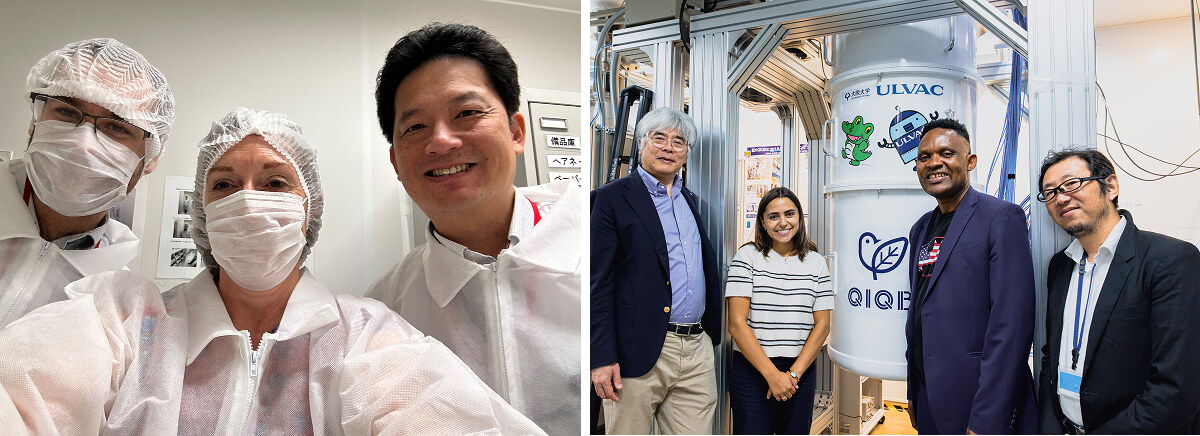
“Being able to 'talk tech' with the scientists and engineers while holding their enabling technologies in my hands really illuminated 'the art of the possible' when the right labs, experts, and funders come together to shape a shared vision.”
— Gloria Elliott, Ph.D., Program Manager, ARPA-H
What comes next
The conversations started in person are continuing, and follow-ups are already underway. Two quantum experts contributed lightning talks at the UNIQUE Proposers Day just days after meeting ARPA-H in Japan; exchanges with contacts made during the trip are continuing; and planning for specific TPD deliverables is moving ahead.
ARPA-H exists to deliver health breakthroughs in years, not decades. We need to harness the cutting-edge innovation and scale-up strengths wherever they are to do that as quickly and efficiently as possible. In Japan, the delegation found an ecosystem eager to work with us and left with the relationships to bring those innovations home.
Learn more about ARPA-H's programs and opportunities for international partners.